How Long Should a Magic Performance Be? (2026 Event Planning Guide)
Wondering how long should a magic performance be? Discover ideal set lengths for stage, close-up, and mentalism to pace your luxury event or gala perfectly.
The easiest way to diminish high-end entertainment isn't a fumbled sleight of hand; it's letting the act run ten minutes too long. When curating an itinerary for a gala, wedding, or corporate summit in the UAE, deciding exactly how long should a magic performance be often feels like a high-stakes guessing game.
You want an experience that genuinely captivates your guests, but you're likely worried about stalling a multi-course dinner service, cutting into keynote speeches, or booking a strolling artist who misses half the room. In luxury event production, timing is everything. Stellar entertainment isn't measured by performer stamina, but by audience energy and social rhythm.
In this guide, you'll discover the ideal performance durations for close-up, stage, and mentalism acts to perfectly pace your event. We'll break down practical guest-to-hour walkaround ratios, explain why compact powerhouse stage sets outperform drawn-out routines, and show you how to seamlessly integrate world-class magic into your program.
Key Takeaways
- Discover standard timeframes across close-up, stage, and mentalism acts to answer how long should a magic performance be for your specific format.
- Learn why high-impact stage routines cap between 30 and 45 minutes to protect guest cognitive engagement and maintain peak prestige.
- Master the roaming headcount formula to guarantee strolling performers connect with every group during cocktail hours without rushing.
- Avoid critical scheduling conflicts with catering service, acoustics, and executive speeches that dilute the luxury atmosphere.
- Explore modular formats for corporate trade shows and multi-phase wedding receptions tailored to high-end UAE itineraries.
Standard Performance Durations: How Long Different Magic Styles Last
Event planners often ask how long should a magic performance be, but the answer hinges entirely on structural staging. Different genres of magic performance dictate completely distinct timelines. Roving close-up entertainment operates across extended multi-hour booking blocks, while stand-up stage illusions require compact, laser-focused set times to maintain theatrical prestige.
Close-up and Strolling Magic Timelines
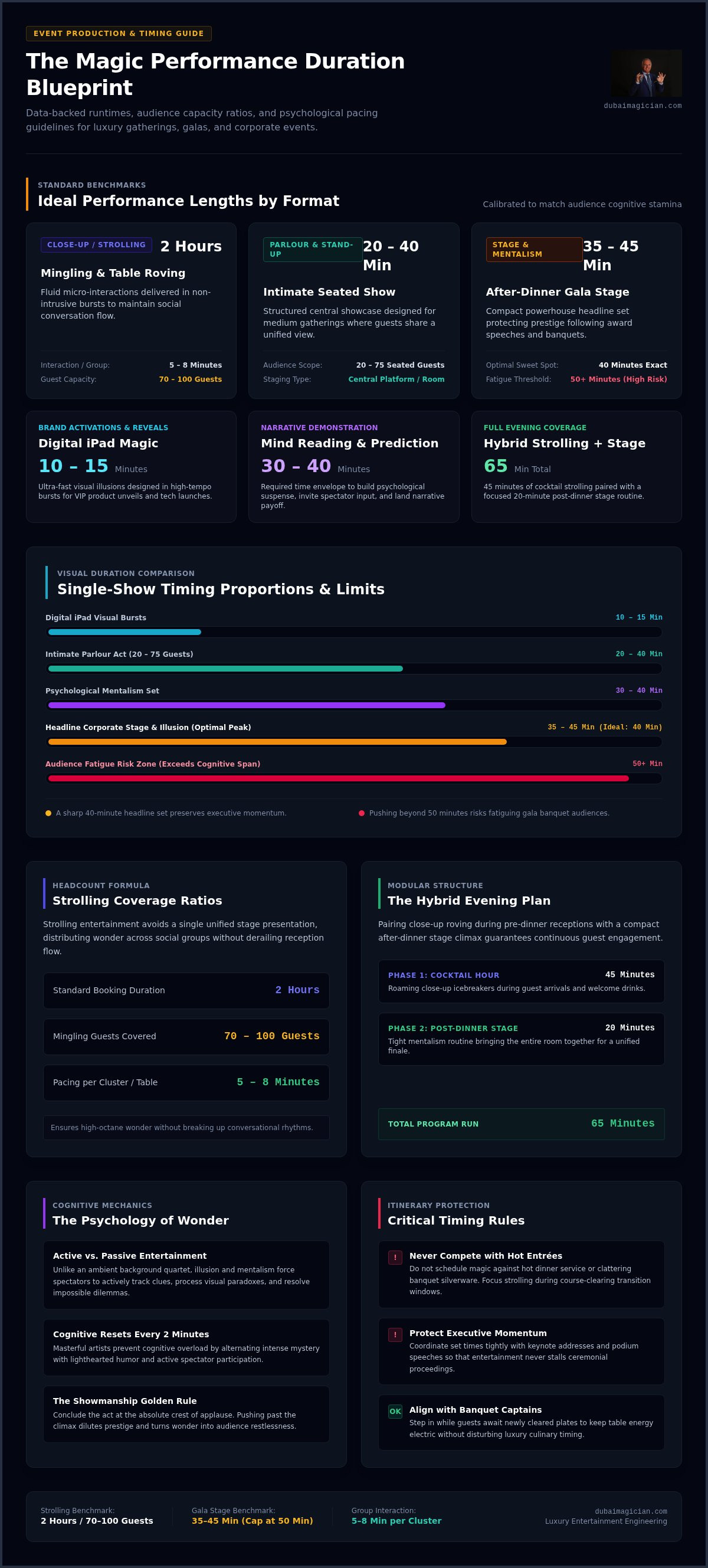
Strolling magic relies on fluid, micro-interactions rather than a single unified showcase. Performers typically spend 5 to 8 minutes engaging an individual standing cluster or banquet table before excusing themselves to the next group. For cocktail hours and receptions across Dubai, a standard two-hour booking comfortably covers 70 to 100 mingling guests. This pacing injects high-octane wonder without breaking up the room's overarching conversational rhythm.
Stand-Up, Parlour, and After-Dinner Stage Shows
When the spotlight turns to a single platform, duration rules tighten dramatically. Intimate parlour acts for 20 to 75 seated guests run best at 20 to 40 minutes, while formal corporate stage mentalism and illusion shows peak between 35 and 45 minutes. Pushing beyond 50 minutes risks fatiguing audiences who have already sat through award presentations or rich gala banquets. A sharp 40-minute headline set preserves executive momentum and ensures your itinerary finishes on an absolute high.
High-Impact Digital iPad Magic and Mentalism Sets
Modern luxury gatherings frequently incorporate specialized tech and mind-reading sets that follow their own temporal rules:
- Digital iPad Magic: Ultra-fast visual illusions work best in brisk 10 to 15-minute bursts during brand activations or VIP product reveals.
- Psychological Mentalism: Thought reading and predictive demonstrations need 30 to 40 minutes to establish suspense, invite spectator participation, and build narrative payoff.
- Hybrid Programming: Pairing 45 minutes of cocktail-hour strolling magic with a tight 20-minute post-dinner stage mentalism routine delivers comprehensive coverage across an entire evening.
Understanding these stylistic differences clarifies how long should a magic performance be for your specific floor plan, ensuring your entertainment feels seamlessly integrated rather than overstayed.
The Psychology of Attention Spans: Why Show Length Matters
Live magic differs fundamentally from passive background music. While an ambient quartet can play for hours unnoticed, illusion and mind-reading require spectators to actively track clues, process visual paradoxes, and resolve impossible dilemmas. Psychological wonder requires active mental engagement, meaning concise performances consistently outperform overlong spectacles. As reflected in the American Psychological Association's research on attention spans, sustained focus naturally decays without deliberate stimulus shifts, highlighting why deciding how long should a magic performance be is essential for protecting event energy.
Cognitive Processing and the Suspension of Disbelief
Tracking rapid sleight of hand or complex psychological predictions without a pause quickly exhausts an audience. Masterful performers prevent this cognitive overload by alternating intense mystery with lighthearted conversational banter. Communal laughter and active spectator participation act as mental resets, refreshing attention every couple of minutes. The goal of sophisticated corporate entertainment isn't packing in as many tricks as possible, but delivering lingering emotional resonance.
Pacing Magic Around Dinner Courses and Formal Speeches
Timing magic around banquet service dictates how smoothly an evening unfolds. Performers should never compete against hot entrée service, clattering silverware, or executive addresses from the podium. Close-up entertainment thrives during transition windows between courses, stepping in while guests await freshly cleared plate rotations. Aligning performance intervals with the banquet captain's schedule respects the culinary experience while keeping table energy electric.
The Showmanship Golden Rule: Leave Them Wanting More
The cardinal rule of high-end entertainment is simple: conclude the act at the absolute crest of applause. Pushing a set past its natural climax dilutes prestige and turns wonder into restlessness. A concise, electrifying performance leaves guests buzzing and debating methods long after the evening concludes. To see how tightly calibrated sets command high-end crowds in real time, explore live corporate performances across Dubai.
Common Event Scheduling Mistakes That Ruin Magic Performances
Even world-class illusionists struggle when forced into a poorly structured run-of-show. When planners miscalculate how long should a magic performance be, they often create friction with venue staff, dilute luxury ambiance, or leave guests feeling either neglected or overwhelmed. Incorporating entertainment into a comprehensive event planning and scheduling checklist helps prevent these common production pitfalls.
Under-Booking: Underestimating Large Guest Headcounts
Expecting a single close-up artist to engage 300 guests in one hour guarantees disappointment. Rushed performers can't deliver the charm, humor, and bespoke astonishment expected at high-end UAE galas. As a rule of thumb, event hosts should allocate roughly 60 to 90 minutes per 100 standing cocktail attendees. Anything less forces the entertainer to sprint past tables, leaving substantial sections of the ballroom unvisited.
Over-Booking: Dragging Entertainment Past Its Natural Climax
More hours do not equal a better experience. Booking an unbroken four-hour strolling shift inevitably leads to diminishing returns. Guests require unscripted breathing room for spontaneous networking, private conversation, and visiting the bar. Rather than trapping attendees in continuous performance cycles, savvy hosts divide long corporate evenings into two distinct, high-impact sets separated by speeches or dinner service.
Scheduling Magic Against Competing Focus Demands
Auditory and visual competition kills live wonder. Sleight of hand and mind reading require close observation and crisp verbal cues:
- Loud Live Bands: Placing a strolling magician directly beside a high-volume brass band or DJ booth destroys vocal intimacy and ruins conversational timing.
- Podium Addresses: Roaming magic must stop completely during formal speeches, executive awards, and charity auctions to avoid splitting audience attention.
- Acoustic Dead Zones: Stage mentalism demands clear sound reinforcement so subtle psychological cues and rapid reveals resonate throughout the entire hall.
Carefully evaluating your venue's sound dynamics and stage layout ensures every routine lands with theatrical precision. To see how seamless timing works in real-world ballroom environments, view behind-the-scenes clips from Thomas McElroy on Instagram.
How to Calculate the Exact Magic Timing for Your Event
Calculating set times shouldn't rely on guesswork. Whether designing a corporate awards gala or an intimate VIP reception, determining how long should a magic performance be requires mapping entertainment directly against your guest count and room choreography. By treating duration as a mathematical formula, you prevent dead air while ensuring no corner of the venue is neglected.
The Walkaround Math: Guest Numbers Divided by Set Times
For strolling and close-up entertainment, timing is determined by group density. A skilled magician typically engages a small standing cluster or seated table for 5 to 7 minutes before moving on. To establish your schedule:
- Group your total guest count into average clusters of 6 to 8 people (e.g., 100 guests = roughly 14 groups).
- At 6 to 7 minutes per interaction plus transition time, a performer comfortably visits 8 to 10 clusters per hour.
- Divide your total clusters by eight to find your baseline booking window; a room of 100 mingling guests requires approximately 1.5 to 2 hours of strolling magic.
For large events exceeding 150 guests, consider booking an extended three-hour window or bringing in multiple artists to prevent rushing.
Balancing Headline Stage Shows Within Gala Programmes
If your entertainment serves as the central anchor rather than background ambiance, the rules shift from roving math to theatrical pacing. The sweet spot for a headline stage illusion or mentalism act is 30 to 45 minutes, positioned immediately after dinner but before dancing or late-night networking begins. Building a 15-minute buffer before the curtain rises absorbs inevitable delays from dinner service or executive remarks, keeping the evening running on schedule.
Coordinating Magic with Venue Itineraries and Course Servings
Seamless execution depends on close alignment with your banquet staff. Schedule stage acts when waitstaff can pause table clearing and service entirely, dimming the house lights to direct absolute focus forward. For cocktail receptions, roaming acts provide ideal cover while photography teams capture portraits or VIP arrivals. Always brief the banquet manager in advance so hot entrées never clash with key reveals.
To plan your bespoke event itinerary with a master mentalist, connect with Thomas McElroy on Instagram to review dates and custom showcase formats.
Tailoring Performance Durations for Luxury Corporate and Private Gatherings
High-tier events across the UAE require bespoke entertainment strategies. A luxury brand activation at Dubai Opera or an exclusive Palm Jumeirah villa demands very different pacing than an exhibition hall. Deciding how long should a magic performance be in these luxury settings is an exercise in curation, ensuring the illusions protect the prestige and flow of your gathering.
Trade Shows and Brand Launches: High-Frequency Micro-Sets
Exhibition booths thrive on high-frequency, modular micro-sets rather than long theatrical routines. In fast-paced expo environments, high-impact digital iPad magic operates in continuous 3 to 5-minute rotations. These brisk digital illusions halt corridor foot traffic immediately without creating pedestrian bottlenecks. The rapid turnover allows corporate brand representatives to step in, scan badges, and qualify prospective clients between performance demonstrations.
Luxury Weddings and Exclusive Private Soirées
Weddings and private celebrations benefit from adaptable, multi-phase entertainment structures:
- Canapé Receptions: A 90-minute roving close-up set bridges the social lull while newlywed couples complete formal photography sessions.
- Dinner Courses: Subtle table-side sleight of hand breaks the ice among guests seated together for the first time without intruding on dining.
- Private Villa Soirées: An intimate 30-minute parlour mentalism act provides a sophisticated after-dinner focal point that engages every guest in the room simultaneously.
Consulting with Your Magician to Perfect the Itinerary
Every venue introduces unique logistical dynamics. During preliminary scheduling consultations, review acoustic limits, lighting arrangements, and attendee demographics with your entertainer. Seasoned professionals read audience energy in real time, speeding up or stretching sets to match the evening's organic momentum. To explore real-world luxury performance examples, view recent engagements by following Thomas McElroy on Instagram.
Mastering Event Flow: Elevate Your Next Event with Precision Pacing
Precision timing transforms good entertainment into an unforgettable luxury hallmark. Deciding how long should a magic performance be isn't about filling an empty slot on an itinerary; it's about respecting guest attention, coordinating smoothly with catering, and concluding at the very peak of wonder. Whether you're planning a 40-minute mentalism stage feature or a multi-hour roaming close-up set, deliberate curation protects your event's prestige.
With over a decade of high-end performance experience across Dubai, Thomas McElroy delivers tailored entertainment trusted by iconic global houses such as Louis Vuitton, Dior, and Mercedes-Benz. Blending sleek digital iPad magic, psychological mind reading, and intimate sleight of hand, custom set timing guarantees your guests remain thoroughly enchanted from the first reveal to the final standing ovation. Watch sophisticated magic and mentalism highlights on Instagram to see how perfectly calibrated pacing will elevate your next celebration.
Frequently Asked Questions
How long should a close-up magician perform during cocktail hour?
A close-up magician should typically perform for 60 to 90 minutes during a standard cocktail hour. This timeframe aligns with guest arrival patterns and drink service before attendees transition into the dining room. It gives the performer enough time to circulate among standing clusters without lingering so long that interactions repeat. For luxury receptions in Dubai with over 100 mingling attendees, booking two full hours ensures complete, unhurried coverage.
Can a stage magic show be longer than 60 minutes?
While theatrical solo shows can extend longer, corporate and gala stage magic shows should rarely exceed 45 to 60 minutes. When deciding how long should a magic performance be on stage, audience attention fatigue is the deciding factor. Beyond the 45-minute mark, guests seated after a multi-course dinner begin losing mental focus. Keeping headline mentalism or illusions concise preserves high production energy and leaves executives energized for the rest of the evening.
How much time does a magician need per table during a seated dinner?
A performer needs roughly 5 to 8 minutes per table to deliver an impactful routine without disrupting dining service. This window allows for a complete, interactive sleight of hand or mind-reading sequence tailored to the table's energy. It also leaves ample time for waitstaff to serve courses and clear plates seamlessly. If your Dubai ballroom features 15 tables, plan for at least 90 minutes of table-side entertainment spread across course breaks.
What happens if our event speeches run late and delay the magician?
Seasoned professional entertainers build flexibility into their schedules to accommodate inevitable run-of-show delays. Experienced Dubai corporate performers stay in close contact with your event coordinator or banquet captain. If executive keynote speeches overrun, the artist can either compress stage routines into a punchier 30-minute set or adjust mingling sets around revised catering courses. Clear pre-event communication ensures timing hiccups never diminish the luxury guest experience.
How long should digital iPad magic performances last at trade show booths?
Digital iPad magic at trade show booths functions best in continuous, rapid micro-sets lasting 3 to 5 minutes each. Exhibition halls demand high turnover to pull walking delegates from busy aisles into your booth space. Short, tech-forward illusions create an immediate visual hook, gather a tight crowd, and stop corridor traffic without blocking pathways. Once the quick routine finishes, booth staff immediately step in to scan badges and qualify leads.
Is a 30-minute magic show long enough for a private VIP gathering?
Yes, a tightly scripted 30-minute parlour or mentalism show is often ideal for exclusive private VIP gatherings. In intimate settings like private villas or luxury suites, high-impact mentalism creates a powerful communal experience without dominating the entire night. It delivers full narrative suspense and personal audience participation while leaving plenty of unscripted time for socializing. When clients ask how long should a magic performance be for private soirées, a focused half-hour frequently delivers the most refined result.
How do I know if I need one or two hours of walkaround magic?
Your total headcount and room setup determine whether a one-hour or two-hour booking is appropriate. The standard planning formula allocates roughly one hour of strolling magic per 40 to 50 guests. If your event has 50 attendees, a single hour provides thorough coverage. For gatherings of 80 to 120 guests across a spacious reception venue, booking two hours ensures the entertainer visits every standing circle and seated table at an enjoyable, unhurried pace.